































Loose vs Tight Smart Ring Fit: Signs Your Overnight Data Is Unreliable
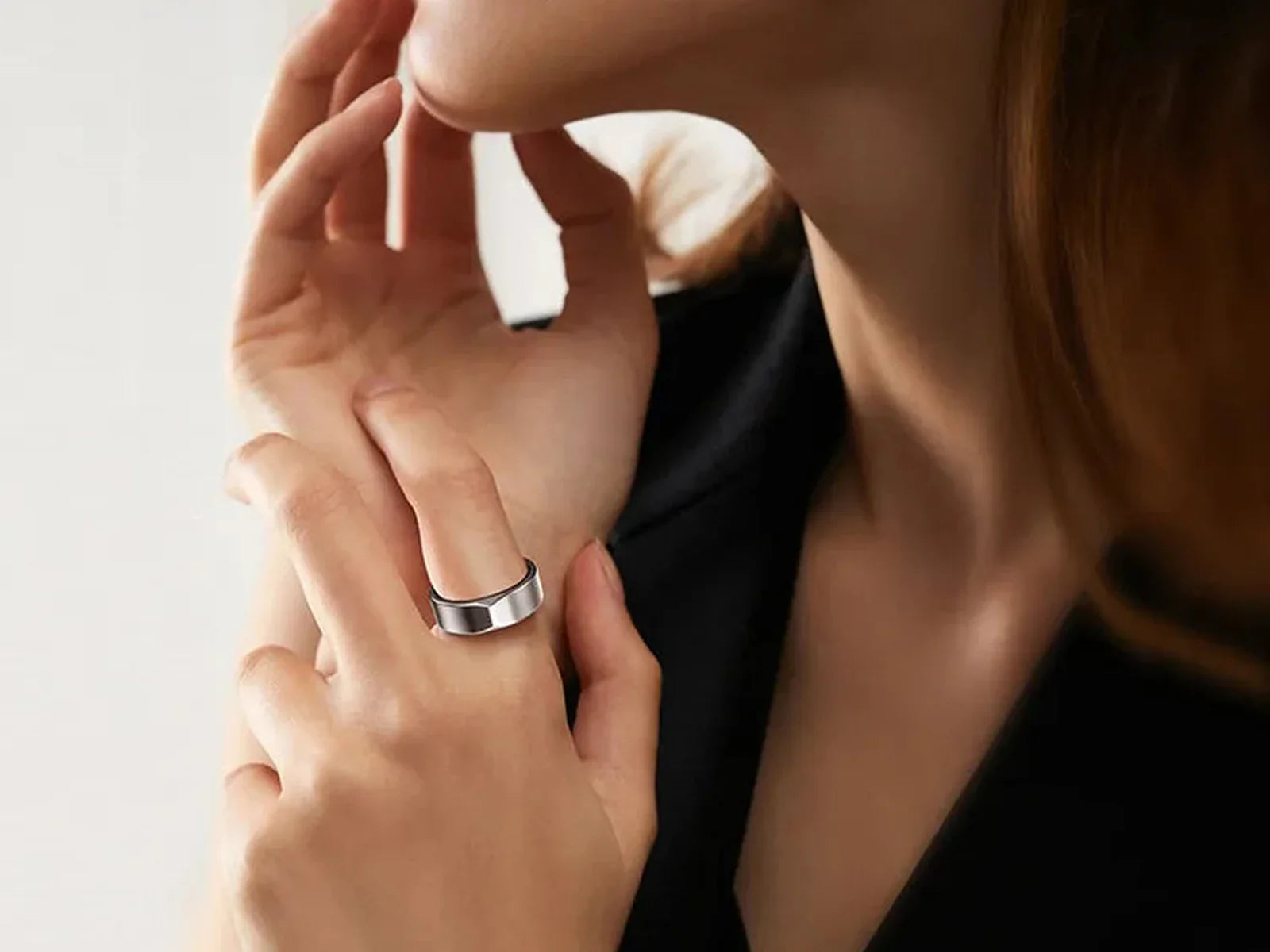
If your smart ring shows dropouts in your overnight heart rate line, missing sleep stages, or a resting heart rate that looks nothing like how you feel, the first suspect is fit, not the sensors. A ring that is slightly loose slides toward the knuckle in bed and loses skin contact, so photoplethysmography (PPG), skin temperature, and motion signals become noisy or blank in patches. A ring that is a little tight compresses tissue and can leave pressure marks, tingling, or a stripe of paler skin in the morning, and can also degrade the same signals. In practice, a well-fitted ring feels almost invisible, stays in place when you rotate your wrist, and produces a continuous, smooth overnight trend rather than a jagged one.
This guide walks through the specific signals in your data and on your finger that suggest your overnight numbers are not trustworthy yet, and how to move from "the ring gave me a bad score" to "I understand why the ring did that and what to change."
Why fit matters more at night than during the day
Smart rings read your body through optical sensors that shine light into the skin and measure what bounces back, plus contact sensors that track skin temperature and small movements. That whole system depends on one thing: stable, continuous contact with the same patch of skin at the base of your finger.
During the day, small shifts in fit usually average out. You move, your hand warms up, blood flow changes, and the ring settles back into position. Overnight is different. Your finger circumference can shrink or swell noticeably between bedtime and dawn, driven by temperature, hydration, sodium intake, alcohol, hormones, and sleeping position. If your ring is already borderline, those normal fluctuations push it into "no reliable signal" territory for hours at a time, and the app fills the gap with estimates rather than measurements.
That is why fit is the foundation of every other number a smart ring shows you. Heart rate variability (HRV), resting heart rate, SpO2 trends, sleep stages, and recovery scores all sit on top of the same underlying signal quality. The order is track, understand, act, and if the tracking layer is unreliable, the understanding and actions built on top are guesses.
Signs your smart ring is too loose
A ring that is too loose usually announces itself in two places: on your finger and in your data.
On the finger, you might notice the ring spins freely with almost no resistance, slides over your knuckle without needing a twist, or ends up rotated so the sensor bump sits on the side or top of your finger instead of the palm-side pad. You may also find it in a different position in the morning than where you left it at night, or on the floor next to the bed.
In the data, the classic pattern is intermittent dropouts. Your overnight heart rate line has visible gaps or flat sections. HRV either fails to record or shows values wildly different from your usual baseline. SpO2 trend graphs are missing hours of data. Sleep stage detection collapses into one long "light sleep" block, or the ring records fewer total hours than you actually spent in bed because it could not confirm you were asleep.
If several of those show up together, you are almost certainly wearing a ring that is too loose for overnight use, even if it feels fine while you type. Two practical checks: try rotating the ring with your thumb, and it should turn with mild friction, not spin freely. And when you take it off in the morning, the inside sensors should feel warm and slightly humid from steady skin contact, not cool and dry.
Signs your smart ring is too tight
Tight fit is more obvious on the finger than in the numbers, at least at first.
Watch for a persistent indentation ring after you take it off, redness or a pale stripe that lasts more than a few minutes, tingling or a "pins and needles" feeling in the fingertip, cold or slightly bluish fingertips, or waking up in the night to move or remove the ring. Any of these mean the ring is compressing tissue and restricting circulation while you sleep. That is uncomfortable and, if it happens night after night, worth taking seriously.
In the data, a too-tight ring can produce a subtler but real distortion. Compressed capillaries change the optical signal that PPG relies on, which can push resting heart rate readings artificially, damp HRV amplitude, and shift SpO2 trend lines in ways that do not reflect what your body is actually doing. You may also see very "clean" looking data that is quietly wrong, which is harder to catch than obvious dropouts.
A ring that is right at the edge of too tight is especially tricky in warm rooms or after salty meals, when fingers naturally swell overnight. If you regularly wake up with marks or numbness, size down is not the answer. Size up by half a size and let the fit settle across a few nights before judging.
The overnight patterns that suggest unreliable data
Here are the specific data signals that should prompt you to check fit before you trust the numbers.
Your resting heart rate jumps 10 or more beats between nights with no clear reason such as illness, alcohol, or a hard workout. HRV swings from your typical range to something extreme and back the next night. Your sleep score is high on a night you felt terrible or low on a night you felt great, repeatedly. Overnight SpO2 shows sudden dips that are not corroborated by any daytime symptoms. Deep sleep or REM completely disappears from one night to the next.
None of these on their own confirms bad fit. All of them together, especially alongside pressure marks or a ring you find in a new position at dawn, strongly suggest the tracking layer is unreliable and the "recovery" number sitting on top of it is not yet worth acting on.
The healthier interpretation of a single strange night is to treat it as one data point, not a verdict. Smart rings and bands are strongest when read as trends across two to four weeks, not verdicts on a single Tuesday. That framing is a core part of how JCVital thinks about sleep tracking and recovery more broadly.
How a well-fitted ring should feel and behave
A ring that is genuinely the right size does a few things well.
It sits snugly at the base of your finger with mild resistance when you try to twist it, but comes off with a firm pull over the knuckle. It stays in roughly the same rotational position through the night, so the sensor pad ends up on the palm-side of your finger, not the back. It leaves at most a very faint temporary impression that fades within a couple of minutes, not a durable groove. You forget you are wearing it within an hour, and you do not wake up thinking about it.
In the data, a well-fitted ring produces a continuous overnight heart rate line with no long flat gaps, HRV numbers that fall within a personal range you start to recognize, and SpO2 and temperature trends that move gradually rather than in step-functions. The point of a good fit is not perfection on any single night, but a stable enough baseline that the week-over-week trend actually means something.
Practical steps if you suspect fit is the problem
Start with sizing done properly. Measure your finger at the end of the day and again first thing in the morning, and pick the middle of the two if they differ. If your ring maker offers a sizing kit, wear the sample size for at least 24 hours, including overnight, before committing. JCVital publishes a step-by-step size guide for this reason.
Then experiment with which finger. Index and middle fingers tend to be more stable overnight than the ring finger, and dominant hand versus non-dominant hand can also matter. Some people who get dropouts on their right index finger see the pattern disappear when they switch to the left middle finger.
Give the fit a full week of nights before deciding. Rotate the ring so the sensor sits palm-side down before you go to sleep. Watch for pressure marks and dropouts as separate signals. If both disappear and your overnight heart rate line becomes continuous, you have your answer.
Finally, once fit is stable, focus on the trend rather than any single number. That is where the Health Insights approach that JCVital takes with rings such as the JCRing Med X3 and JCRing Air X6, and bands such as the JCVital Pro V8, tries to be useful: turning a couple of weeks of clean data into a small number of things worth actually adjusting in your routine.
Smart rings are wellness tools, not medical devices. They are not intended to diagnose, treat, cure, or prevent any disease, and if you have persistent symptoms such as numbness, chest discomfort, or breathing changes overnight, talk to a qualified clinician rather than to your ring's app.
FAQ
How tight should a smart ring be for accurate sleep tracking? Snug enough that it does not spin freely when you flick it with your thumb, but loose enough that it slides off over the knuckle with a firm pull. If it leaves a lasting indentation or your fingertip feels cold or tingly in the morning, it is too tight. If it rotates on its own overnight or you find it in a new position at dawn, it is too loose.
Which finger is best for overnight wear? Most people get more stable overnight data on the index or middle finger than on the ring finger, because those fingers tend to swell and shrink less through the night. Non-dominant hand often has less motion interference. It is worth trying two placements across a week each and seeing which produces a more continuous heart rate line.
Why does my HRV change so much from night to night? HRV is naturally variable, and it responds to sleep quality, alcohol, illness, training load, and stress. But dramatic night-to-night swings with no lifestyle explanation often trace back to inconsistent skin contact from a ring that slides or rotates. Fix the fit first, then judge the HRV pattern across two to four weeks rather than on any single reading.
Can I wear my smart ring only at night? Yes, and some people prefer this once they see how much fingers swell during workouts or in warm weather. A ring sized specifically for overnight wear, when your fingers are near their smallest, is often the most comfortable option for sleep tracking.
Should I trust a single bad sleep score? Not really. One strange night is a data point, not a verdict, and the most likely explanations are fit, a late meal, alcohol, or a late workout, not a hidden problem. Wearables like smart rings are wellness tools that show trends over weeks. Persistent or worrying symptoms are a reason to talk to a qualified clinician, not the app.
Related JCVital guides
- JCRing smart ring collection
- Smart ring vs smartwatch for sleep tracking
- Apple Watch vs JCRing sleep comfort
- JCRing vs Oura Ring
References
Apple. "Apple Watch and sleep tracking: battery and charging behavior." https://support.apple.com/en-us/HT213345 Charlton, P.H. et al. "Wearable photoplethysmography for cardiovascular monitoring." Proceedings of the IEEE, 2022. https://ieeexplore.ieee.org/document/9733701 Miller, D.J. et al. "A validation study of a commercial wearable device for measuring nocturnal heart rate and heart rate variability." Sensors, 2022. https://www.mdpi.com/1424-8220/22/16/6317 Shaffer, F. and Ginsberg, J.P. "An Overview of Heart Rate Variability Metrics and Norms." Frontiers in Public Health, 2017. https://www.frontiersin.org/articles/10.3389/fpubh.2017.00258/full American Academy of Sleep Medicine. "Consumer sleep technology position statement." Journal of Clinical Sleep Medicine, 2018. https://jcsm.aasm.org/doi/10.5664/jcsm.7128 Internal links to include Smart Rings collection — anchor "smart ring lineup" in the well-fitted section. JCRing Med X3 product page — anchor "JCRing Med X3" in the practical steps section. JCRing Air X6 product page — anchor "JCRing Air X6" in the practical steps section. JCVital Pro V8 product page — anchor "JCVital Pro V8" as the band alternative for people whose fingers don't do well with rings. Sleep tracking page — anchor "sleep tracking" in the overnight patterns section. Sport and recovery page — anchor "recovery" in the overnight patterns section. Size guide — anchor "size guide" in the practical steps section. About JCVital — anchor "Health Insights" in the closing paragraph. Smart Bands collection — anchor "smart bands" when introducing wrist-worn alternatives. JCVital blog hub — anchor "Sleep and Recovery articles" in the closing area if a related-reading block is added. Image plan Cover image: a clean, close-up macro shot of a titanium smart ring on a finger against a soft neutral background, warm morning light, no visible screen or app UI. Convey "quiet, well-fitted, overnight-friendly." In-body image 1 (in "Signs your smart ring is too loose"): a top-down photo of a hand on a white duvet showing a ring rotated slightly off-center, hinting at nighttime slippage. Avoid any text overlays or graphs. In-body image 2 (in "Signs your smart ring is too tight"): a subtle image of a finger just after removing a ring, with a very faint impression line, warm indoor lighting. Do not exaggerate redness or make it look medical. In-body image 3 (in "How a well-fitted ring should feel and behave"): a lifestyle shot of a person sleeping with a hand resting on the sheet, ring visible but unobtrusive, calm cool tones. Reinforces the "invisible when correct" idea.
All images should be photographic, avoid AI-generated app screenshots or numeric overlays, and never render diagnostic-sounding words in-image.
Final self-check
No body H1: yes No visible alt placeholders: yes Medical claims framed as wellness trends: yes Product facts treated conservatively: yes Direct GEO answer included early: yes